
The difference between having the flexibility to wait and having the pricing power to get what you want.
By Lauren Tetreault | Lauren Tetreault & Team, Coldwell Banker Realty
“I don't have to sell.”
I've heard those five words more times than I can count over my decades in real estate.
And I understand exactly what homeowners mean when they say them.
They're comfortable in their homes. They're not facing a financial deadline. They have the luxury of waiting for the right buyer and the right price.
That's a wonderful position to be in!
But here's something I wish more sellers understood:
You don't have to sell. But buyers don't have to buy.
And those two realities have to coexist in the real estate market.
What feels like negotiating leverage to a seller may sound very different to a buyer.
Sometimes, it sounds like permission to wait.
What Sellers Mean vs. What Buyers Hear
When a homeowner says, “I don't have to sell,” they're usually communicating something entirely reasonable:
I'm not desperate. I know what my home is worth. I can afford to wait.
There's nothing wrong with that position.
In fact, sellers who aren't under pressure often have more flexibility when evaluating offers, negotiating terms, and deciding whether a particular transaction makes sense.
But buyers aren't evaluating a seller's personal circumstances.
They're evaluating the house.
They're comparing its asking price, condition, location, features, and overall value with other properties available to them.
And when a home is priced beyond what those comparisons support, the buyer's response may be quite simple:
We'll keep looking.
That's the disconnect.
A seller's motivation doesn't establish a home's market value. Buyers' willingness to purchase does.
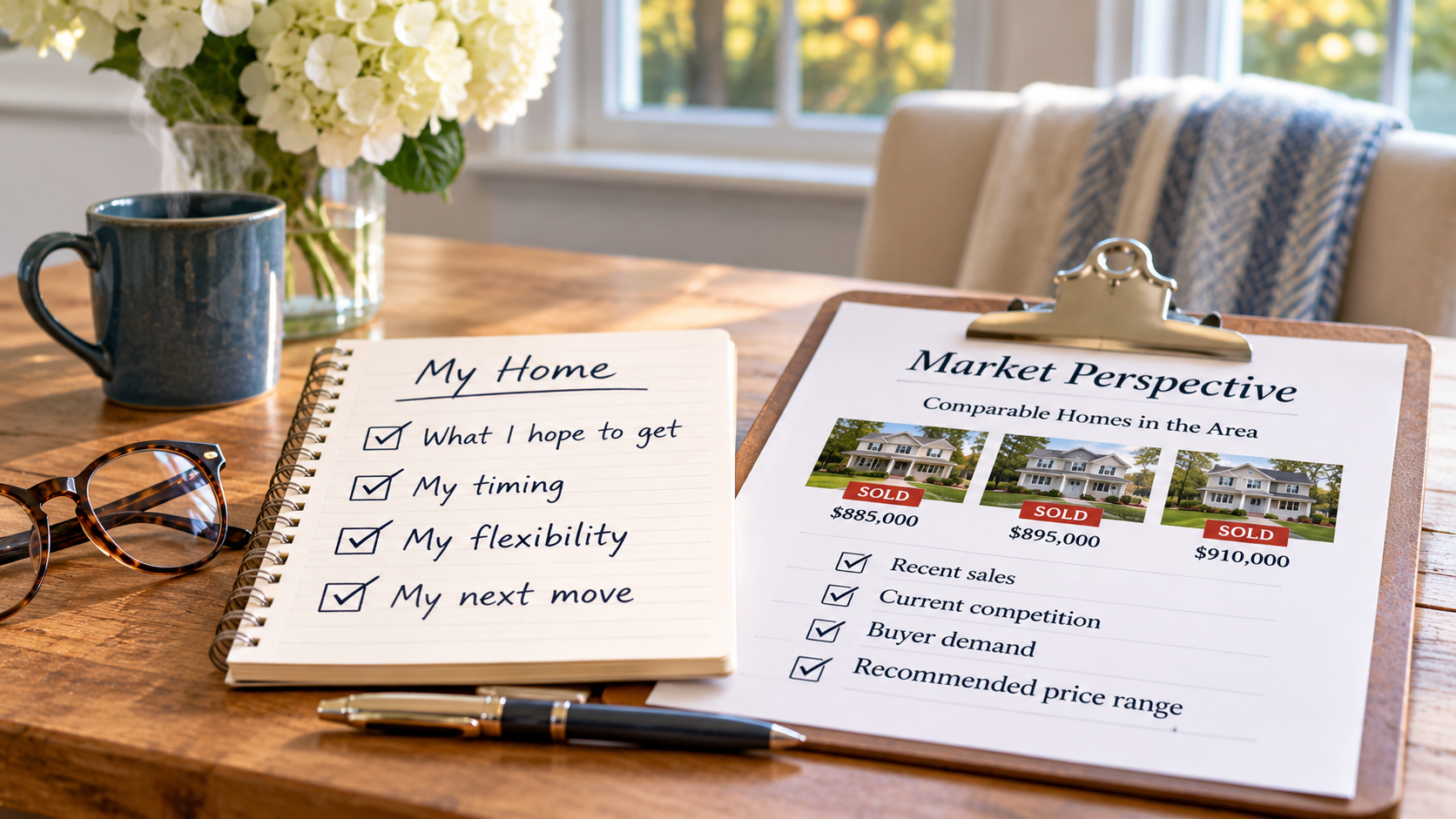
The Market Doesn’t Negotiate With Your Motivation
I often remind sellers that a house can be absolutely wonderful and still be overpriced.
It may have beautiful gardens, an exceptional setting, thoughtful improvements, or decades of cherished family memories.
Those qualities may all matter deeply to the seller. But do they carry the same value for a buyer?
Here's where I have an obligation to be the realist in the room: the cherished memories you've made in your home are priceless to your family. But they don't add market value for the next buyer.
Buyers are evaluating the property they're purchasing, not the memories you're leaving behind.
A buyer considering a home in Maynard may be comparing it with other homes in Maynard, Acton, Stow, or nearby communities.
Someone shopping in Lincoln or Concord at a considerably higher price point may have a very different set of choices, expectations, and negotiating considerations.
Even within the same town, the market for a $600,000 home can behave quite differently from the market for a $2 million property.
That's why I don't believe in applying broad pricing rules to every home.
Pricing is local, price-range-specific, and highly dependent on the competition.
And while a seller's circumstances are important to our strategy, they don't change what competing properties offer buyers.
Waiting Has a Cost. But Not Always the Cost You Think.
Here's where things get interesting.
Some sellers assume that because they don't need to move, waiting doesn't really cost them anything.
Not necessarily.
Every month of homeownership involves expenses, including property taxes, insurance, utilities, maintenance, and potentially mortgage-related costs.
Those expenses aren't automatically losses caused by waiting. If you're continuing to live in and enjoy your home, many are simply the normal costs of ownership.
But if you've already decided to move, are maintaining a vacant property, or are carrying two homes, the financial consequences of a delayed sale can become significant.
Consider this hypothetical example:
| Illustrative monthly expense | Amount |
|---|---|
| Property taxes | $900 |
| Homeowners insurance | $250 |
| Utilities | $400 |
| Maintenance allowance | $300 |
| Total monthly expenses | $1,850 |
| Six months of expenses | $11,100 |
These figures are illustrative, not MetroWest market averages or a prediction for any particular property. They exclude mortgage payments, financing costs, and changes in sale price.
The important question isn't simply how much it costs to own the home for six more months.
It's how much of that expense is truly incremental to your plans, and whether waiting is likely to improve your eventual outcome.
That deserves a thoughtful calculation—not an assumption.
The Other Cost of Waiting: Losing Buyer Momentum
There's another consideration that doesn't show up neatly on a spreadsheet.
Buyer attention.
When a home first enters the market, it has an opportunity to attract people who have been actively searching for something just like it.
A well-positioned listing can generate interest from those buyers relatively quickly, although the pace varies considerably by property and price range.
But if the asking price is substantially out of line with competing homes, buyers may pass it by.
As the listing ages, new properties may come onto the market. Some may offer better value, more appealing features, or more favorable terms.
And buyers may begin asking a question sellers never want to hear:
Why hasn't that house sold?
Sometimes the answer is simply that the right buyer hasn't appeared yet.
But sometimes the answer is that the asking price hasn't matched the market.
The longer that disconnect continues, the more difficult it may become to recapture the attention that was available when the property first launched.
Time on the market doesn't automatically make a home less valuable. But time alone doesn't make an unrealistic asking price more convincing, either.
The Price Reduction Trap
Let's say a homeowner believes the house should sell for $900,000, but the most relevant market evidence suggests buyers are likely to respond more favorably at a lower price.
The seller decides to test $900,000 anyway.
After several weeks with limited activity, the price is reduced.
Then perhaps reduced again.
By the time the property reaches a price that buyers find compelling, it has already spent considerable time on the market.
Could the seller still achieve a good outcome? Absolutely.
But there's a risk that repeated adjustments, changing competition, and lost early interest will complicate the sale.
That's why I spend so much time discussing pricing before a property goes live.
It's not about convincing sellers to accept less than their home is worth.
It's about understanding where the home fits in the current market and positioning it to attract the buyers most likely to appreciate its value.
And if the market response doesn't match our expectations, we need to evaluate that information promptly.
Related seller resource: Learn how Lauren Tetreault & Team approaches listing and marketing a home.
MetroWest Isn’t One Real Estate Market
This is especially important in communities like Maynard, Stow, Concord, Lincoln, Acton, and Sudbury.
Our towns are geographically close, but their housing markets aren't interchangeable.
The buyer considering a smaller single-family home in Maynard may be focused on a different set of alternatives than the buyer evaluating a historic property on acreage in Lincoln.
Even two homes with similar square footage may compete very differently because of condition, setting, architectural style, layout, and price.
At higher price points, the pool of qualified buyers may be smaller, and the time required to find the right match can be longer.
That doesn't automatically mean a property is overpriced.
It means we need to interpret market activity in context.
I look at comparable sales, active competition, new listings, buyer feedback, showing activity, and the particular characteristics of the property.
A lack of immediate offers is information. But it isn't, by itself, proof that the price is wrong.
Experience matters because knowing when to be patient is just as important as knowing when to make a change.
There’s a Difference Between Not Needing to Sell and Not Wanting to Sell
Here's another question I sometimes explore with homeowners:
Do you genuinely want to sell, or are you simply curious what someone might pay?
Those are two very different situations.
If you're happy in your home and would move only if someone offered an extraordinary price, that's a perfectly legitimate position.
But it may also mean that listing the property right now isn't your best option.
Putting a home on the market involves preparation, disruption, showings, maintaining its presentation, and inviting buyers to evaluate it against other available properties.
If the price you're willing to accept is substantially above what current market evidence supports, it may make more sense to wait before listing.
That isn't giving up.
It's making a deliberate decision about whether the time is right.
On the other hand, if you truly want to sell and accomplish a move, your pricing and marketing strategy should reflect that goal.
What Experienced Sellers Do Differently
The strongest selling strategies aren't built around urgency or stubbornness.
They're built around good information and thoughtful decisions.
Here's what I encourage sellers to do:
Understand your competition. Know which homes buyers are likely to consider alongside yours—not simply which properties happen to be nearby.
Price with purpose. Establish an asking price that reflects the property, current market evidence, and the buyers we're trying to reach.
Make the first impression count. Preparation, presentation, professional photography, and marketing all influence how buyers perceive a home.
Pay attention to the response. Showing activity, feedback, competing listings, and offers can help us evaluate whether the strategy is working.
Know your options. Sometimes the right decision is to adjust the price. Sometimes it's to hold steady. And sometimes it's to reconsider whether selling now makes sense.
Most importantly, don't confuse patience with inaction.
You can be patient and still be strategic.
Considering a sale? Explore Lauren Tetreault & Team’s home valuation information.
The Bottom Line: Flexibility Is an Advantage. Overpricing Isn’t.
If you don't have to sell, you have something valuable: choices.
You may be able to negotiate without the pressure of an immediate deadline. You may have time to prepare your property carefully, evaluate offers thoughtfully, and decide whether moving makes sense.
That's real leverage.
But it doesn't mean buyers will pay more simply because you're willing to wait.
The market doesn't care whether you NEED to sell. It cares whether your home represents value.
And there's a big difference.
After decades of helping homeowners throughout MetroWest Massachusetts, I've learned that some of the most important conversations happen before a property ever reaches the market.
Sometimes the answer is to list now.
Sometimes it's to prepare for a future sale.
And sometimes it's to stay right where you are.
The goal isn't simply to put a house on the market.
It's to make a decision that works for you—and to have a strategy that gives that decision its best chance of success.
Frequently Asked Questions About Pricing a Home in MetroWest Massachusetts
Does a seller’s lack of urgency give them more negotiating power?
It can provide greater flexibility in evaluating offers and terms. However, a seller's willingness to wait doesn't automatically increase what buyers are willing to pay.
Does a home lose value the longer it stays on the market?
Not necessarily. Extended market time can reflect price range, property characteristics, market conditions, or pricing. However, a listing that isn't attracting its intended buyers deserves a careful review.
Is it better to price a home high and negotiate down?
Not always. An asking price substantially above relevant market evidence may discourage buyers from viewing the property. And remember, buyers KNOW the market. They've seen the comparable properties, they understand their alternatives, and if they sense that a home is overpriced, they may simply wait—or move on. Here's the problem with pricing high in anticipation of negotiating down: It's awfully hard to negotiate when there's no offer to negotiate with! The right pricing strategy considers the home, its competition, and current market conditions.
How much does waiting six months to sell a house cost?
It depends on the homeowner's circumstances. Property taxes, insurance, utilities, maintenance, mortgage expenses, and the cost of carrying another property may all be relevant. The important calculation is which expenses are additional because of the delay.
How do you determine the right asking price for a home in Maynard, Concord, Lincoln, or Stow?
A pricing analysis should consider recent comparable sales, active competing properties, location, condition, distinctive features, buyer demand, and the property's specific price range. Townwide averages alone rarely tell the whole story.